Sepsis in the Porcine Model: Why Physiological Relevance Makes the Difference in Clinical Translation
10 / 07 / 2026 | Versa Biomedical

Sepsis research has a translation problem: despite decades of preclinical work, no new therapy has clearly improved patient outcomes, and rodent models often do not reproduce human cardiovascular and immune physiology closely enough to predict clinical results. That is why model choice is not a technical detail; it is the foundation of successful translation.
This is precisely the conviction that drives our work at Versa Biomedical. We have designed and implemented a robust LPS-induced sepsis and endotoxaemia model in swine, one of the large-animal models with the greatest clinical relevance in critical care research.
Why Swine in Sepsis Research?
Swine reproduce, with a degree of fidelity that few models achieve, the human cardiovascular and immune response to a septic insult. This physiological closeness is what makes the porcine model a tool of high translational value for the development of anti-sepsis drugs, immunomodulatory therapies, medical device testing and biomarker validation.
- Cardiovascular and immune relevance: cardiovascular anatomy comparable to that of humans, together with a robust haemodynamic and inflammatory response.
- Organ size compatible with device studies at human scale.
- Cytokine storm that closely mirrors human septic shock.
- Suitability for serial sampling and monitoring throughout the study.
Our Experience in Sepsis and Septic Shock
This platform builds on a broader foundation: more than twelve years designing ad hoc preclinical models, more than two hundred projects delivered across fourteen countries, and a team of surgeons and experts who are integral to how we work. Within that broader track record, our specific experience in sepsis and endotoxaemia includes lines of work such as:
- Efficacy studies of new anti-sepsis compounds using the dose-dependent LPS model.
- Validation of immunomodulatory therapies in septic shock, with full haemodynamic and inflammatory follow-up.
- Device testing for support and monitoring systems, in a model with organ size compatible with human clinical use.
- Discovery and validation programmes for early sepsis and endotoxaemia biomarkers.
If your programme fits within one of these lines, we are happy to talk: our facilities are open to sponsors, ready to design, together, the study your project needs, however unusual it may be.
Experimental Design: How We Induce and Monitor the Model
The model is induced through intravenous administration of LPS in Specipig® miniature pigs and conventional pigs, at a dose of 3 µg/kg administered over ten minutes, which triggers controlled acute endotoxaemia. From that point, monitoring is continuous and serial:

Example study timeline for the LPS-induced septic shock model.
- Serial blood sampling, with plasma aliquoting, full blood count and cytokine panel at each timepoint.
- Continuous physiological monitoring: SpO₂, heart rate, respiratory rate, capnography, body temperature and arterial blood pressure.
Validated Data: Dose-Dependent Response
Across the dose range tested (1–4 µg/kg LPS IV), intravenous administration triggers a robust and consistent cytokine response, consistent with the clinical picture of acute endotoxaemia and septic shock. TNFα reaches a dose-dependent peak of close to 10,000 pg/mL at 4 µg/kg:
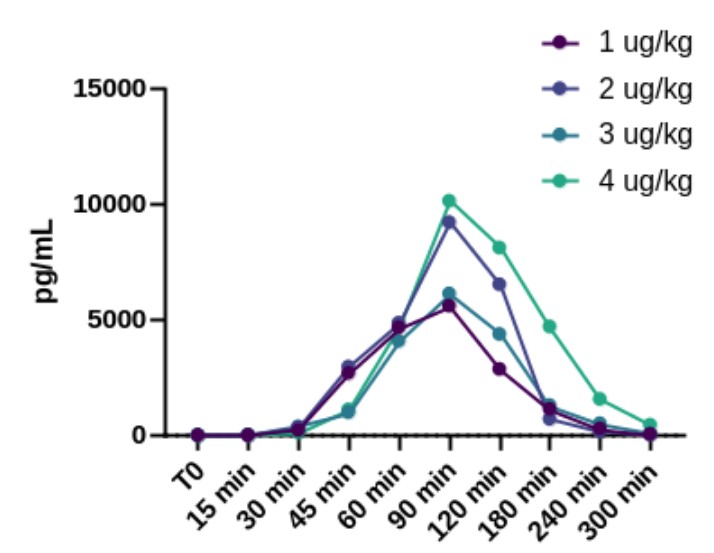
Dose-dependent TNFα peak following LPS administration (1–4 µg/kg IV).
IL-6 shows a later but equally robust kinetic, exceeding 40,000 pg/mL at five hours at the highest dose:
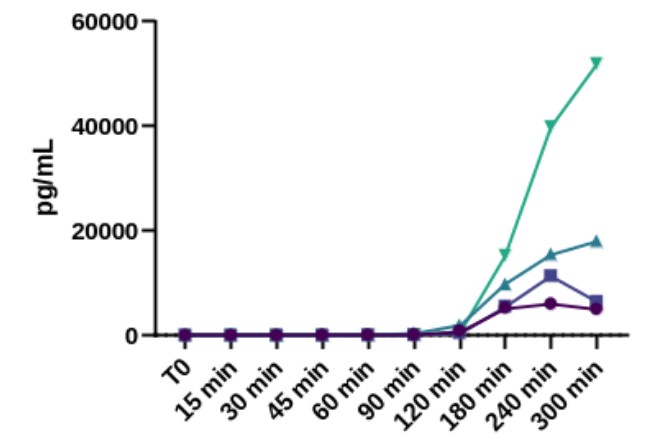
IL-6 kinetics following LPS administration (1–4 µg/kg IV).
IL-10 and IL-8 likewise show a fully responsive profile, while haematology readings confirm significant changes in white blood cells, neutrophils and platelets, consistent with the picture of acute endotoxaemia. Taken together, the profile confirms the robustness of the model for efficacy and safety studies.
A Model Open to Complex Studies
By combining a clinically relevant disease model, validated endpoints and expert study design under one roof, we help our sponsors generate solid translational data for new anti-sepsis compounds, immunomodulatory agents, medical devices and biomarker discovery programmes. If you are designing your next sepsis or septic shock study, at Versa Biomedical we are open to discussing the challenge, however complex or unusual it may be.